Why does it matter?
| Electricity is one form of energy that you use everyday. Because energy is essential to our daily lives, the grid's ability to avoid disruptions to your electricity supply is also essential. |
|
The grid’s ability to avoid power disruptions, or quickly recover from them if they do occur, is essential to our daily life.
|
| Category |
Example |
| Safety and security |
Emergency lighting and hazard detection rely on power |
| Human health |
Life support systems in hospitals depend on electricity |
| Economic stability |
Businesses need power to operate, outages can disrupt supply chains |
| Communication |
Charging your phone and maintaining communication over long distances depends on a reliable energy source, something even more important in isolated areas like Sitka. |
Balancing Tradeoffs and Opportunities
|
What are the trade-offs and opportunities for improving grid reliability and resilience?
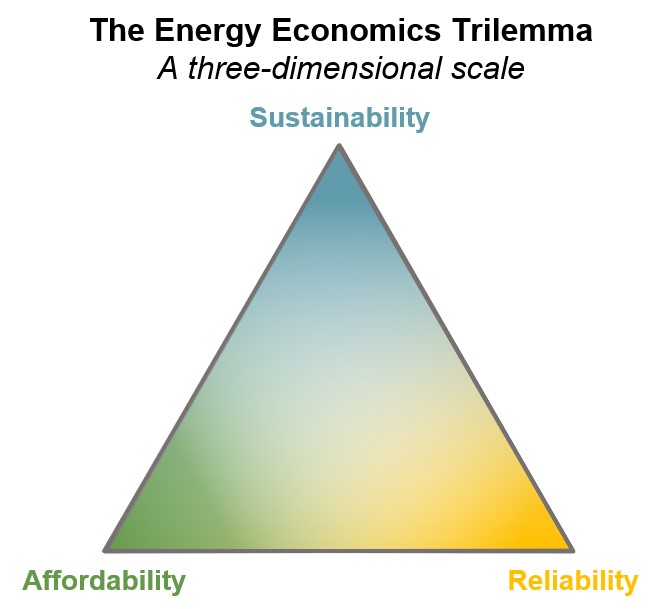
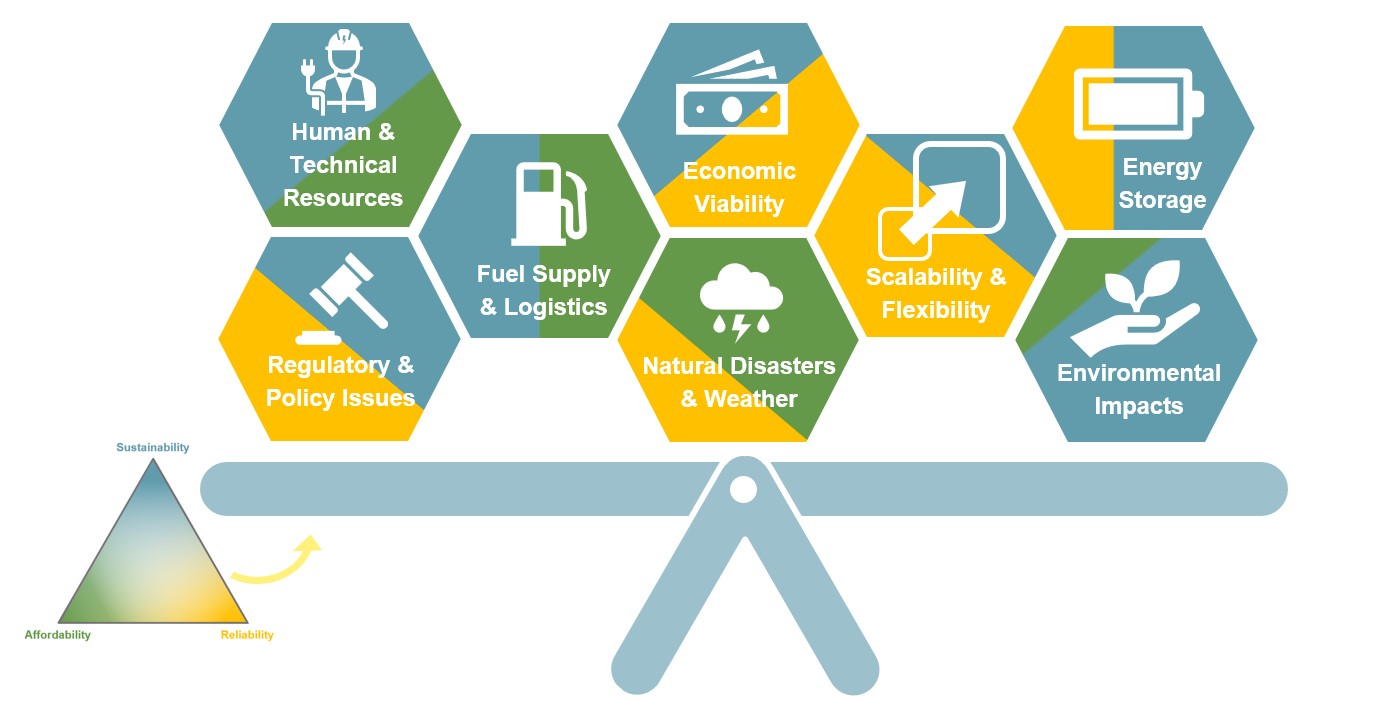
This involves balancing reliability, resilience, sustainability, and affordability, which are all critical considerations. Some solutions are "win-win-win" (e.g., energy efficiency), which reduces emissions, lowers energy bills, and reduces reliance on the grid during times of risk. However, other solutions require prioritizing among these factors, considering elements like economic viability, natural disasters, technical resources, regulatory issues, scalability, and flexibility.
|
| Optimizing the Balance |
 |
 |
|
The electric utility, must optimize three areas—affordability, sustainability, and reliability. Optimizing this balance is a challenging process due to competing initiatives, needs, wants, and mandates. The real question is: how do we engage and ensure that we are doing the right projects at the right time with the right resources?
The solution to this is performing a risk assessment to drive informed decisions.
|
Understanding Risk
|
Risk assessments are used to identify the best and most effective ways to to build a reliable and resilient electric grid through informed management actions.
|
|
Definition of Risk
"The effects of uncertainty on objectives"
ISO 31000 Risk Management Framework
|
The International Organization for Standardization (ISO) has created a risk management framework, developed with global experts, to guide risk assessment. Essentially, risk arises from threats and vulnerabilities, and the likelihood of failure and its consequences.
The effects part refers to the consequences of an event—such as financial impacts, health and safety risks, or reliability concerns. The uncertainty on objectives refers to the impact on our goals, such as reliability and safety. Identifying these objectives, which could include safety or reliability goals, is essential during a risk assessment.
|
The Risk Assessment Framework and Benefits
|
ISO 31000 Risk Assessment Framework
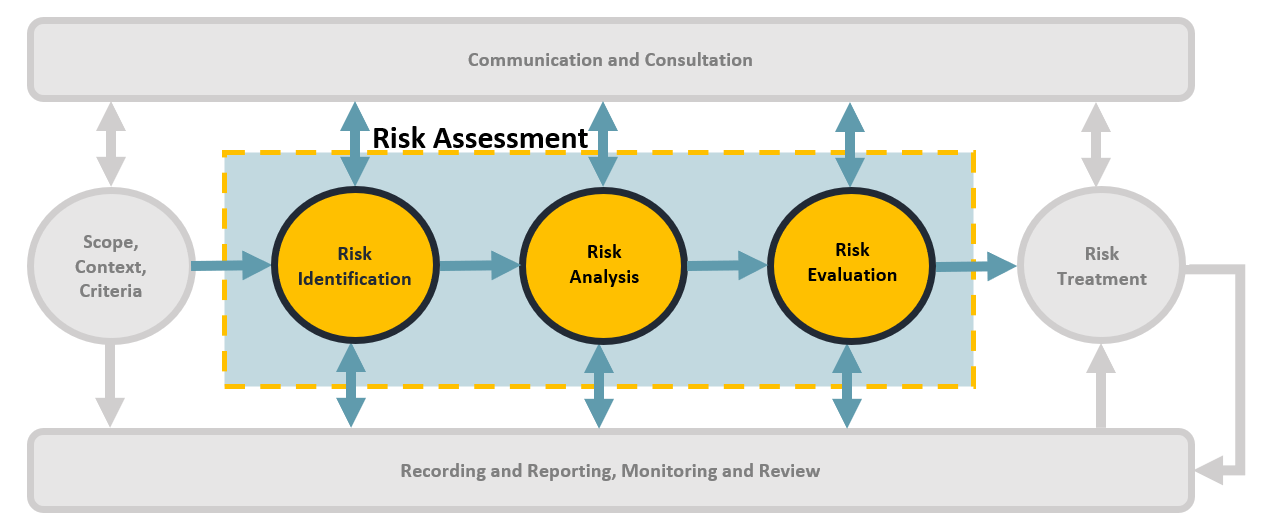
The overall risk management framework has seven components. However, to address risk assessment, we only need to focus on the center three which include risk identification, risk analysis, and risk evaluation.
|
|
Risk Identification
|
Identification of issues can occur through condition assessment, a study, etc.
|
|
Risk Analysis
|
Analysis occurs to determine issue details such as the likelihood and consequence
|
|
Risk Evaluation
|
Takes place when decision-making bodies determine if the results are acceptable
- Do we accept the risk and maintain existing controls?
- Do we undertake further analysis and/ or obtain additional information to better understand the risk (study)
|
| Benefits of a Risk Assessment |
|
|
Having a clear understanding of our risk profile will helps identify areas of vulnerability and places where threats need to be mitigated.
Benefits include:
- Better informed decisions
- Improved safety
- Increased operational efficiency
- Improved transparency
- Reduced operational costs
- Better emergency preparation
- Improved trust with regulatory agencies
- Improved organizational alignment
- Focused spending
|
|
Vulnerabilities in Sitka
 |
Security and Technology
 |
|
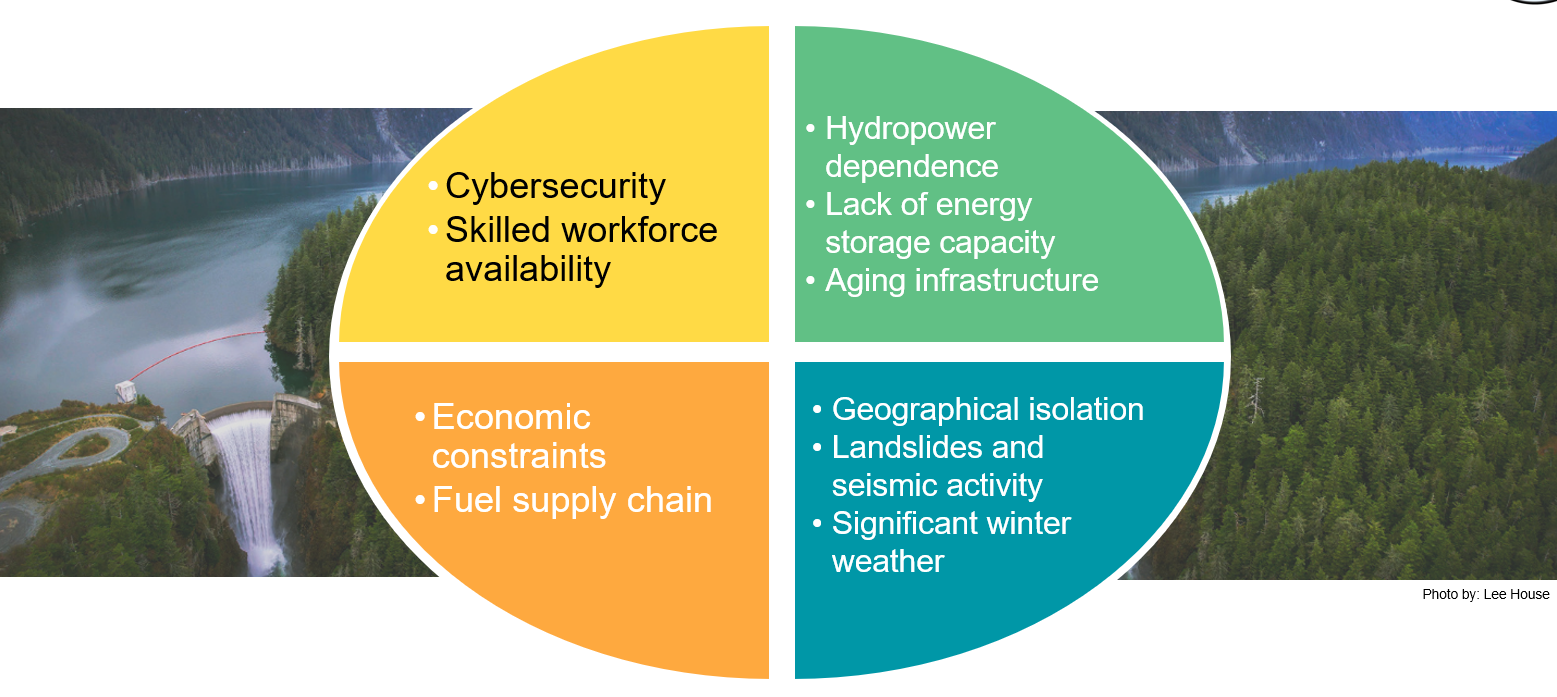
In terms of security and technical vulnerabilities, one concern is cybersecurity. As the grid becomes more interconnected and smart, the risks associated with cybersecurity also grow. Additionally, Sitka’s relatively small grid has several single points of failure, which could cause widespread impacts. To address these risks, focusing on implementing robust training and protocols to maintain cybersecurity and prevent failures is recommended. Additionally, exploring microgrids and improving network segmentation can help minimize power outages when issues arise.
Examples of other places addressing these issues include Maryland's transmission and distribution communications resiliency initiative, Michigan's work on sectionalization to limit outages, and Tennessee's rural areas transitioning to microgrids to avoid power loss during outages.
|
Infrastructure and Resource Vulnerabilities
 |
|
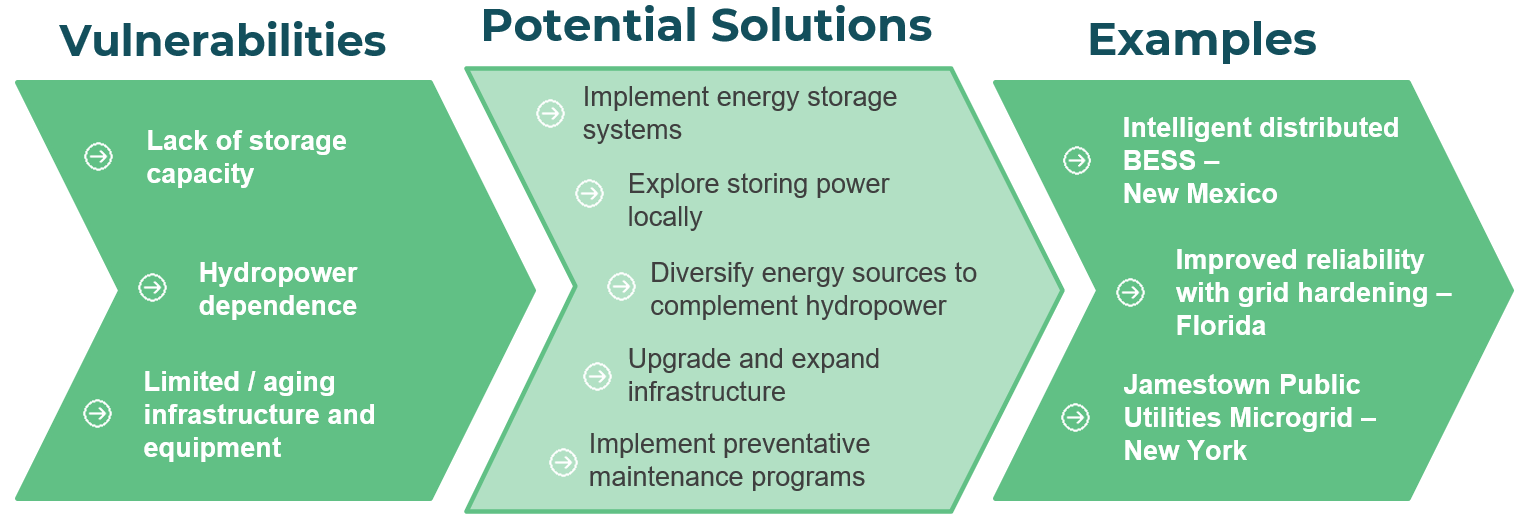
Some of the key vulnerabilities Sitka faces include a lack of storage capacity. Having energy storage would allow excess energy to be stored, like when there's an abundance of hydropower, for later use during shortages. Another vulnerability is the dependence on hydropower. While this is a benefit, it also means Sitka is reliant on a single energy source, besides backup diesel which is expensive. A third issue is the limited and aging infrastructure. Electric infrastructure is costly to upgrade and maintain, and aging equipment is prone to more frequent failures.
To address these vulnerabilities, building energy storage systems in cost-effective locations, such as near neighborhoods or commercial centers where power is needed. Sitka could also aim to diversify energy resources to complement hydropower, reducing reliance on just one energy source. Expanding and upgrading infrastructure is costly, so focusing on the most impactful, cost-effective upgrades is critical. Preventative maintenance programs are also key to replacing equipment before it fails and causes larger issues.
Looking at examples from other regions, New Mexico's rural areas have implemented an intelligent distributed energy storage program, placing storage at vulnerable, high-risk customers to continue providing energy even if transmission or distribution lines fail. In Florida, extensive grid hardening efforts have helped improve reliability against extreme weather, such as undergrounding lines and using stronger poles. In New York, a public utilities microgrid in Jamestown ensures power to critical infrastructure even after a loss of the distribution system.
|
Geographical and Environmental
|
|
|
One of the major challenges is geographic isolation, which makes Sitka reliant on limited external resources and faces logistical issues. Additionally, Sitka deals with extreme weather, such as heavy rain, storms, and high winds, which impact infrastructure. Landslides and seismic activity also pose risks to the grid, as does the changing climate, which affects water availability for hydropower generation.
To address these vulnerabilities, expanding backup options, including backup generators and energy storage, to ensure power during outages can be explored. Another solution is undergrounding power lines and reinforcing poles to make the system more resilient to extreme weather. Developing effective emergency response plans and placing landslide control measures will also help mitigate risks.
Examples of successful strategies from other areas include Hawaii's climate adaptation resiliency program, which structures responses to climate change risks. Virginia has implemented a strategic underground program, placing vulnerable overhead power lines underground. California has focused on extreme weather resilience, which provides valuable insights for us to consider.
|
Economic and Supply Chain
|
|
|
In the economic and supply chain area, Sitka faces unique challenges due to its geographic isolation. For example, there is a vulnerability in the fuel supply chain, as Sitka is dependent on diesel for backup power. There are also economic constraints due to the high cost of grid upgrades, as well as a lack of readily available equipment during outages. Maintaining a skilled workforce in a small, remote community is another challenge.
Solutions include establishing larger and strategically located fuel storage, investing in local renewable energy resources, and providing training programs to build a skilled workforce. Sitka is also pursuing grants and technical assistance to fund upgrades without passing on the full cost to customers.
Examples from other areas include Guam's renewable energy rollout, which reduces dependency on fossil fuels, and various grant programs, such as the Building Resilient Infrastructure in Communities (BRIC) grant through FEMA.
|
|
Keep Exploring Sitka's Energy
Questions? Contact
This page was last updated January, 2026
|